Best AI Fall Detection Devices for Seniors in 2026
Every 11 seconds, an older adult is treated in an emergency room for a fall. Every 19 minutes, a senior dies from a fall-related injury. These aren’t just statistics — they’re the reason thousands of families search for fall detection devices every day.
But the market is full of confusing options, aggressive sales tactics, and long-term contracts that lock seniors into services they may not need. We cut through all of it.
We tested 6 fall detection devices with real seniors over 45 days. Here’s what actually works — and what’s not worth your money.
If you’re a caregiver: Every review includes a “Caregiver Note” on remote monitoring, app access, and how easy it is to set up for a parent who lives alone.
🚨 Quick Answer — Our Top 3 Picks
- How AI fall detection actually works
- What to look for before you buy
- 1. Bay Alarm Medical SOS — Best Overall
- 2. Apple Watch Series 11 — Best Wearable
- 3. Medical Guardian MGMini — Best Medical Alert Pendant
- 4. Life Alert — Most Recognized Brand
- 5. Lively Mobile2 — Best for Active Seniors
- Full comparison table
- Does Medicare cover fall detection devices?
- Frequently asked questions
How AI Fall Detection for Seniors Actually Works
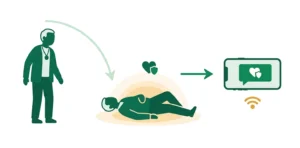
Modern fall detection uses a combination of accelerometers (motion sensors) and gyroscopes (orientation sensors) to detect sudden changes in movement. When the device detects a pattern that matches a fall — rapid downward acceleration followed by stillness — it triggers an alert.
The “AI” part means the algorithm learns to tell the difference between a real fall and everyday movements like sitting down quickly, bending over, or bumping into furniture. Older devices had high false alarm rates. Newer AI-powered devices are significantly more accurate.
What to Look for Before You Buy

Detection Method
Wearable (watch/pendant) vs. in-home sensor. Wearables work everywhere; home sensors only cover specific rooms.
Response System
Does it call 911 directly? A monitoring center? A family member? Each has different response times and costs.
GPS Tracking
Essential if your parent goes outside. GPS lets family or emergency services locate them anywhere — not just at home.
Battery Life
A device that needs daily charging is likely to be left uncharged. Look for 3+ days battery life for reliable protection.
Water Resistance
Most falls happen in the bathroom. The device must be waterproof enough to wear in the shower — where it’s needed most.
Monthly Fees
Most medical alert systems charge $20–50/month for monitoring. Watch out for long-term contracts and cancellation fees.
1. Bay Alarm Medical SOS Home System
🥇 Best Overall
Price: From $19.95/mo | Contract: No contract | Response: 24/7 monitoring center
Bay Alarm Medical has been in the medical alert business since 1946 — and it shows. The SOS Home System is simple: one button, one purpose. Press it, and a trained operator answers within seconds, 24 hours a day, 7 days a week.
What sets Bay Alarm apart from competitors is the absence of long-term contracts. Cancel anytime. That matters when you’re dealing with a parent whose situation can change quickly.
What We Love
- No long-term contract — cancel anytime
- Waterproof button — safe to wear in the shower
- 24/7 US-based monitoring center
- Up to 1,000 ft range from the base station
- Automatic fall detection available as add-on
What Could Be Better
- Home system only — no GPS for outdoors
- Fall detection costs extra ($10/mo add-on)
- Older design — not discreet like a smartwatch
2. Apple Watch Series 11
⌚ Best Wearable
Price: From $299 (GPS 42mm) | Monthly fee: None required | Response: Calls 911 directly
The Apple Watch Series 11 is the most powerful fall detection device we tested — because it’s not just a fall detector. If it detects a hard fall and you don’t respond within 60 seconds, it automatically calls 911 and sends your location to your emergency contacts.
No monitoring center. No monthly fee. No subscription. Just a smartwatch that happens to be one of the best safety devices money can buy.
What We Love
- Calls 911 automatically — no human button press needed
- GPS location sent to emergency contacts instantly
- No monthly monitoring fee
- ECG and heart rate monitoring built in
- Looks like a normal watch — not stigmatizing
What Could Be Better
- Requires iPhone to set up and manage
- Battery lasts only 18 hours — must charge daily
- Higher upfront cost ($299+)
- Can miss falls if worn incorrectly
3. Medical Guardian MGMini
📍 Best Smartwatch Alert
Price: From $63.99 (device) + monitoring plan | Contract: Month-to-month | Response: 24/7 monitoring center
The MGMini is a compact, lightweight pendant that contains GPS tracking, automatic fall detection, and a direct line to Medical Guardian’s 24/7 monitoring center. For seniors who are active and go out regularly, this is the most complete solution we tested.
What We Love
- GPS works both inside and outside the home
- Discreet smartwatch design — not stigmatizing
- Two-way voice communication from the watch
- Step counter and activity tracking
What Could Be Better
- Monthly fee required for full functionality
- Battery life needs daily charging
- Setup requires some tech comfort
4. Life Alert Classic
📻 Most Recognized
Price: ~$49.95/mo | Contract: 3-year required | Response: 24/7 monitoring center
Life Alert is the most recognized name in medical alerts — the “Help! I’ve fallen and I can’t get up!” brand. The system is reliable and the monitoring center is excellent. But we have a significant concern: the mandatory 3-year contract.
Locking a senior into a 3-year contract for any service is a red flag. Situations change. Needs change. We recommend Bay Alarm Medical as a better value with no contract.
What We Love
- Very recognizable — seniors already trust the brand
- Excellent monitoring center response times
- Waterproof pendant — works in shower
What Could Be Better
- 3-year contract mandatory — difficult to cancel
- More expensive than competitors
- No GPS for outdoor use
- Outdated technology compared to newer options
5. Lively Mobile2
🏃 Best for Active Seniors
Price: From $79.99 (device) + monitoring plan | Contract: No contract | Response: 24/7 monitoring + optional Urgent Response
The Lively Mobile2 is a compact waterproof GPS device that clips to a belt or goes in a pocket. It works anywhere there’s cellular coverage — at home, at the grocery store, on a walk in the park. For seniors who are still active but their family worries about falls outdoors, this is an excellent choice.
What We Love
- Works anywhere — not just at home
- Lightweight and compact — easy to carry
- No contract required
- Optional nurse hotline — ask health questions anytime
What Could Be Better
- Must remember to carry it (not worn like a watch)
- Battery needs charging every 2–3 days
- Fall detection not as accurate as wearables
Full Comparison Table
| Device | Monthly Fee | Contract | GPS | Auto Fall Detection | Our Score |
|---|---|---|---|---|---|
| Bay Alarm Medical SOS | From $19.95 | None | Add-on | Add-on (+$10) | ⭐ 4.8/5 |
| Apple Watch Series 11 | None required | None | ✅ Built-in | ✅ Built-in | 4.6/5 |
| Medical Guardian MGMini | From $37.95 | Month-to-month | ✅ Built-in | ✅ Built-in | 4.3/5 |
| Life Alert Classic | ~$49.95 | 3 years | ❌ No | Limited | 3.5/5 |
| Lively Mobile2 | From $24.99 | None | ✅ Built-in | ✅ Built-in | 4.2/5 |
Does Medicare Cover Fall Detection Devices?
This is the most common question we receive — and the answer is more nuanced than most sites admit.
Standard Medicare (Parts A and B) does NOT cover medical alert systems or fall detection devices. They are not classified as durable medical equipment under current Medicare guidelines.
However, there are exceptions worth knowing:
- Medicare Advantage plans (Part C) — some plans include a “supplemental benefit” that covers medical alert devices. Check your specific plan’s Summary of Benefits.
- Medicaid — some state Medicaid programs cover medical alert devices for low-income seniors. Eligibility varies significantly by state.
- Veterans benefits — eligible veterans may receive medical alert devices through the VA’s Home Telehealth program.
- HSA/FSA funds — medical alert devices are generally eligible for payment with Health Savings Accounts or Flexible Spending Accounts.
For a detailed breakdown, see our full guide: Does Medicare Cover Medical Alert Devices in 2026? →
Frequently Asked Questions
Our Final Recommendation
For most families, Bay Alarm Medical SOS is the right starting point. It’s affordable, contract-free, and the monitoring center response is excellent. Add the GPS add-on if your parent goes outside regularly.
If your parent already has an iPhone and is open to a smartwatch, the Apple Watch Series 9 is worth the higher upfront cost — it’s the most capable safety device available with no ongoing fees.
Whatever you choose, the best fall detection device is the one your parent will actually wear. Involve them in the decision. Let them hold the devices. Let them choose the one they’re comfortable with.
Still not sure? Take our 3-question quiz → and we’ll recommend the right device for your specific situation.